

The artist thinks of their paintings primarily as landscapes. Lately, these landscapes have taken on a more manufactured feel rather than organic. At first glance, the subjects may appear to be monumental forms like prairies and mountains, but upon closer inspection, they could actually be smaller, more manageable things like objects on a blanket or figures on a rug. The subjects have a tactile quality and their scale is ambiguous.
The paintings are arranged in a shallow, semi-aerial perspective, and the forms within them are often depicted in three dimensions. Each artwork incorporates an element of illusion, similar to what we see in traditional paintings. However, upon closer examination, the forms depicted seem to be made up of nothing other than paint itself or possibly a related material like modeling clay. These are abstract compositions that have risen slightly above the two-dimensional plane in order to represent a variety of things.
Even though the artist considers these paintings to be landscapes, they rarely consist of objects that resemble grass, trees, or water. The ground of the painting is simply paint that twists and transforms, taking on the appearance of buildings, targets, ropes, sticks, worms, cones, clouds, bubbles, and areas of flat color. The ground is an unreliable element caught in the act of self-transformation. There is a sense of movement in the paintings that challenges the weight and solidity of the objects depicted. These works use the language of abstract painting to question the nature of representation.
Judith Berry was born in London, Ontario and grew up in Saskatoon, Saskatchewan. She studied at the Nova Scotia College of Art and Design in Halifax and spent one year in the Studio Program at the Banff Centre School of Fine Arts. She has had solo exhibitions across Canada in Montreal, Toronto, Calgary and Ottawa. Judith has also shown in numerous group exhibitions including exhibitions at the Musée du Québec and the Canada Science and Technology Museum. She has received funding from the Conseil des arts et des lettres du Québec and the Canada Council. Her work is in various collections including: the Musee du Québec, the City of Ottawa, the City of Montreal, the Royal Bank, and the Art Bank of the Canada Council. She has served as a jury member for the Conseil des arts et des lettres du Québec and the City of Ottawa.
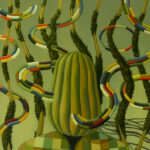
Portrait
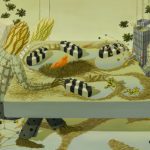
Escalade
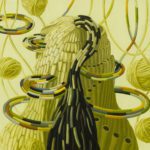
The Lives…
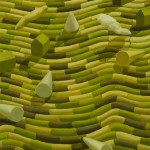
Excursion
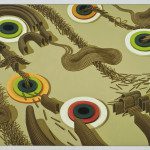
Duped Duplicata
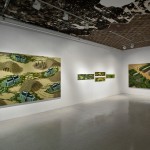
Moats, Ropes & …

Le Champ révisé
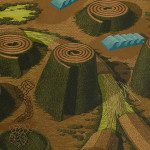
Monuments périssables